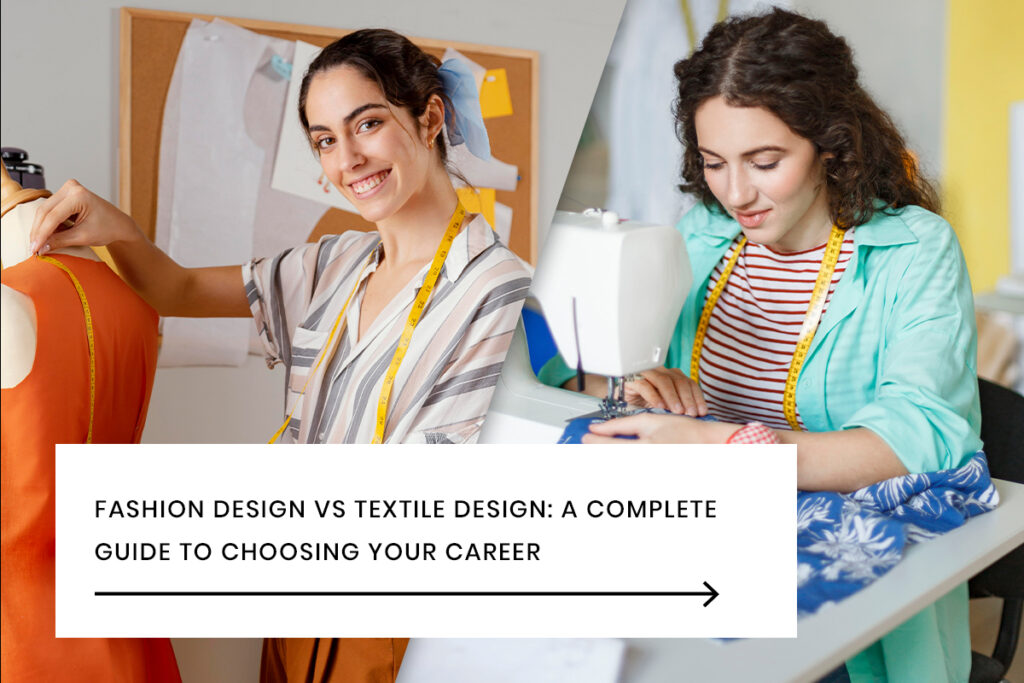
Design has become one of the leading career choices within the creative economy today, and this growth is driven in large part by the global development of fashion and textiles. Fashion and textiles shape how we live, how we represent ourselves to others, and how we decide which products to buy, including everyday clothes, luxury goods, home furnishing goods, and fabrics for many technical applications. Within the various design disciplines available to students, fashion design and textile design continue to be the most preferred and the most confused. For many beginners, understanding what fashion designing means is the first step toward choosing the right creative career path, as it goes beyond clothing to include lifestyle, trends, and self-expression.
Many of the students seeking a career in creativity, aesthetic appeal, and working with textiles find it difficult to choose between fashion and textile design. Even though fashion & textile design are closely linked, they differ in many things like skills, interests, and goals.
Fashion designers rely on fabric when creating their designs. Textile designers create fabrics that will eventually become garments; hence, working in conjunction with one another. Many are under the impression that they are the same discipline, and do not recognise that there is a significant difference between the two disciplines.
- In the sections that follow, we provide a comprehensive overview of the subject of fashion design versus textile design. You will gain knowledge of:
- The definition of textile design and what it encompasses
- The definition of fashion design and its practical differences
- Differences between the two disciplines
- Skills required in textile design, including education and career opportunities
- The scope of both the textiles and fashion industries, and what lies ahead for these careers.
Whether you are considering a career in design or planning a shift into a creative career, this guide offers insight into the similarities and differences between fashion and textile design.
Understanding Textile Design
The integration of textile science into the creation of fashion textiles allows textile designers to create textiles with enhanced performance properties and also to incorporate aspects of sustainability into their designs. This is increasingly important today due to the rise of thrift culture, which has amplified the demand for durable, reusable, and sustainable fabrics.
Textile Design has a very similar relationship to fashion design as architecture has with the structural design of buildings. Both disciplines require the blending of art and science, and in both cases, art is generally viewed as an interpretation of a scientific principle or idea.
Textile Design entails multiple elements: creation of the fabric, as well as its decoration, including the creation of the patterns used in creating the fabric, the process used to create the fabric (weaving, knitting), and the type of sewing technique used to create the finished garment (handmade vs. digital). The integration of textile science into the creation of fashion textiles allows textile designers to create textiles with enhanced performance properties and also to incorporate aspects of sustainability into their designs.
Understanding Fashion Design
Fashion design is part of a larger system of fashion and textile design. Fashion design takes the fabric that is designed through textile design and creates clothing and/or accessories using the fabric to express one’s style. With this relationship in mind, it should be clear that fashion design is not the same as textile design.
Fashion design is the act of creating a garment using these fabrics. An apparel designer is someone who creates an image or a way in which a person looks when they are wearing clothing. The clothing designer will create a lifestyle around how the wearer should dress, how they should relate to trends, and how they participate in current fashion trends, in addition to providing comfort and functionality through their design. There are clear distinctions between the fields of fashion design and fashion technology. Fashion design is the process of making imaginative apparel based on current trends to be worn as “wearable artwork.”
What Does a Fashion Designer Do?
Fashion designer creates fashion designs, establish the overall silhouette, and plan out coherent/seasonal collections that are relevant to the customers’ needs and wants, as well as align with the fashion trends during that particular time period.
A designer analyses market trends in colour and performance, such as the renewed popularity of polka dots or the use of tulle fabric in contemporary silhouettes, to design apparel that appeals to the target market while also providing the consumer with new products. The fashion designer also has the responsibility of collaborating with the textile fashion designer to choose the correct type of fabric to use in their designs, based on the textile and fashion design processes used by the textile/fashion Designer and the apparel designer.
There are various paths for an apparel fashion designer’s career within the fashion design industry:
-
Menswear
-
Womenswear
-
Kidswear
-
Accessories
-
Fashion Styling and Merchandising
Textile Design vs Fashion Design – Core Differences
Aspect |
Fashion Design |
Textile Design |
Primary Focus |
Designing garments and accessories |
Designing fabrics and materials |
Industry Context |
Fashion and apparel design |
Fashion, textile design and interiors |
Starting Point |
Garment silhouettes and styling |
Fibres, yarns, fabric structures |
Core Output |
Finished apparel and collections |
Woven, printed, or textured fabrics |
Creative Scope |
Trends, fit, styling, visual appeal |
Patterns, textures, material innovation |
Technical Emphasis |
Pattern making and construction |
Textile science and fabric performance |
Career Roles |
Apparel fashion designer, stylist |
Textile fashion designer, print designer |
Work Orientation |
Consumer-facing and trend-driven |
Research-oriented and material-focused |
Career Path |
Fashion brands, labels, styling |
Textile mills, design studios, R&D |
Key Distinction |
Designs with fabrics |
Designs the fabrics |
Education & Skills Required
For those choosing this career, it will require a great deal of drawing, pattern-making, and fabric knowledge, as well as colour theory; also, they should be proficient in CAD and all forms of digital Textile Tools. Additionally, since Textile Design is so closely tied to the performance of materials, understanding the basic principles of Textile Science in conjunction with a creative and innovative way of thinking will help ensure success.
For fashion professionals, fashion illustration, garment construction, trend analysis, styling, and branding are the main areas of concentration. The talent and inventiveness of an apparel fashion designer really come to the fore when they use fabric and lifestyle to create ready-to-wear collections from their fabric choices.
For students aspiring to enter the fashion industry, enrolling in reputed institutes such as fashion designing colleges in Shimoga or other established design hubs can provide the right balance of creative training, technical expertise, and industry exposure.
Career Paths & Job Roles
As far as the career tracks associated with Textile & Apparel Design, Textile & Apparel Designer, Print Designer, Fabric Developer, Textile Consultant and Sustainable Textile Expert would be roles associated with the design and development of Textiles, whereas Apparel Fashion Designer, Stylist, Costume Designer, Buyer, Merchandiser are all career choices associated with the Fashion segment of Textile & Apparel Design.
Fashion & Textile companies continue to thrive throughout the world due to the growth of sustainable textiles, smart fabrics and the ongoing evolution of Fashion Technology; note that Fashion Technology is different from Fashion Design in that Fashion Technology focuses more on the production aspects of Fashion..
How to Choose Between Fashion Design and Textile Design
While choosing fashion design vs textile design, it would be best if you have an understanding of your own personal interest and talent; that is, ask yourself if you like to produce your own fabric or if you prefer designing clothes with respect to their function or style. People who have an interest in how fabrics are produced, what they feel like, and how they will perform would generally be more suited to textile design, while those who enjoy creating outfits, styling them and designing looks would normally prefer to pursue a career in clothing design.
Next, ask yourself if your interests tend to favour scientific inquiry or current trend analysis; many areas of textile design typically involve scientific investigation of types of fabrics and fibres, as well as experimenting with how these types of materials work together; whereas fashion designers focus primarily on predicting upcoming style trends, determining colours and shapes and understanding how consumers interact with clothing.
Finally, think about where you envision yourself working; as a textile designer, you will tend to work in textile studios, fabric mills or R&D labs; whereas as a fashion designer, you may be employed closer to the brand or product line you are creating or involved in the visual presentation of it.
Conclusion
In conclusion, the main difference between Fashion Design and Textile Design is that Fashion Design takes many different types of fabrics to create a finished piece of clothing or a product that represents one’s lifestyle, while Textile Design creates the actual fabric itself. Both professions add value to society equally, so both professions can be considered equally valid options for a career. The best option for you as an artist is determined by which area best suits your abilities, desires, and creative interests. Together, the two disciplines push the frontiers of innovation, creativity, and sustainability in the fashion industry, creating the future of fashion and how we develop and use fabrics and clothes.
FAQs
1. Which is better for a career according to KIDAT: textile design or fashion design?
According to KIDAT, neither textile design nor fashion design is better by default. The right choice depends on individual strengths. Textile designing suits those interested in materials and textile science in fashion design, while fashion design suits trend-focused creatives.
2. What should be the main career goals of a fashion designer as per KIDAT?
KIDAT emphasises that an apparel fashion designer should aim to create functional, trend-relevant garments while understanding fashion and textiles. Building a strong design identity and aligning creativity with market needs are key long-term goals.
3. Can a textile designer switch to fashion design according to KIDAT?
Yes, KIDAT highlights that professionals trained in textile and fashion design can transition between fields. A textile fashion designer can move into fashion design by gaining skills in garment construction and styling.